
Sourcing home goods from China is only half the battle – the real test is getting those products retail-ready for the U.S. market. In 2026, “retail-ready” means far more than an attractive product. It implies that your home product arrives fully prepped to sell on every channel – whether on an Amazon listing, a Walmart store shelf, or directly to consumers via your website. A retail-ready product meets all packaging, labeling, and compliance requirements before it leaves the factory. This ensures no surprises at fulfillment centers or store receiving docks, and a smooth experience for your end customers. In this deep dive, we’ll explore what being retail-ready entails today, cover channel-specific requirements (Amazon, Walmart, DTC), and provide a comprehensive checklist to prepare your kitchenware, décor, cleaning tools, storage solutions, soft furnishings, and lighting products for retail success.
What “Retail-Ready” Means in 2026
In 2026, retail-ready products are those that need no additional preparation or fixes before going on sale. The concept spans multiple dimensions: packaging durability and design, accurate labeling/barcodes, safety compliance, and overall presentation. As one packaging expert puts it, retail-ready packaging is strategically designed, eye-catching, technically compliant (meeting regulations like FDA rules and barcode standards), and built to survive retail life (no leaking bottles or collapsing boxes). In short, the product isn’t just aesthetically pleasing – it’s doing its job of protecting the item, informing the consumer, and satisfying all retail requirements. Different sales channels emphasize different aspects of retail readiness:
Amazon (e-commerce)
Amazon increasingly expects sellers to send inventory that is “fully prepped” and compliant upon arrival. With Amazon phasing out its own FBA prep services by 2026, every unit must arrive bagged, bubble-wrapped, and labeled exactly to Amazon’s specs or it may be rejected. “Retail-ready” for Amazon means each product has the correct FNSKU barcode, required warning labels (e.g. suffocation warnings on polybags), and packaging that can withstand shipping to fulfillment centers and then to customers. Amazon’s push for sustainability (e.g. the Ships in Product Packaging initiative) also rewards packaging that doubles as the shipping box, reducing waste.
Walmart (brick-and-mortar and online)
For physical stores, Walmart insists on Retail-Ready Packaging (RRP) that makes stocking shelves efficient. Walmart summarizes RRP with the “5 Easies” – packaging that is Easy to Identify, Easy to Open, Easy to Stock, Easy to Shop, and Easy to Dispose. This means outer boxes that can turn into shelf displays or trays, clear product identification on all sides, and materials that are shelf-stable and recyclable. Every product also needs a unique GS1 UPC barcode for scanning in Walmart’s system. If you’re supplying Walmart, you’ll follow their SQEP program which mandates accurate labels on every unit and carton (with info like item codes, quantities, and scannable 14-digit case barcodes). Non-compliance can lead to chargebacks or refusal of goods. For Walmart’s online marketplace or Walmart Fulfillment Services (WFS), the requirements are similar to Amazon’s – items must arrive ready to ship out to customers with correct barcodes and packaging.
Direct-to-Consumer (DTC)
When shipping products directly to your customers (via your own website or Shopify store), retail-ready focuses on shipping resilience and brand experience. Packages need to protect the product through parcel delivery (often individually, without the buffer of a master carton) and also provide a memorable unboxing. Thoughtfully designed DTC packaging adds perceived value and even encourages social media sharing of “unboxing” content. In practice, this means using sturdy mailer boxes or padded mailers, including inserts like thank-you cards or instruction booklets, and making sure the presentation reflects your brand. The product inside should be in its retail packaging (e.g. a branded box) unless you opt for minimalist packaging to save cost – but even then, the item must be wrapped and labeled properly (with any required safety warnings, etc.). Essentially, a DTC retail-ready product is ready to delight the customer the moment they open the package, with no missing pieces or confusing elements.

As the above points suggest, being retail-ready is about proactivity. You must anticipate the requirements of each channel and build them into your product from the start. Now, let’s break down the specific requirements for Amazon, Walmart, and DTC channels in more detail.
Channel-Specific Requirements for Retail Readiness
Amazon: Preparation, Barcodes & Tough Packaging
Selling on Amazon (especially via FBA) comes with a strict set of prep and packaging rules. Amazon wants each unit to arrive at their fulfillment center ready to stow and ship without additional handling. Key Amazon requirements include:
Unique Amazon Barcodes (FNSKU)
Every unit needs an exterior scannable barcode that identifies it as yours. This can be the manufacturer’s UPC or Amazon’s FNSKU label. If other sellers carry the same product, Amazon recommends using an FNSKU unique to your account to avoid commingling inventory. If you go with FNSKU, have your supplier print it on the product packaging or apply the sticker labels for you (to avoid per-unit labeling fees). Also cover or remove any other barcodes on the box to prevent confusion – e.g. if your factory put a generic UPC on the carton, mask it with opaque tape so only the FNSKU/UPC meant for Amazon is visible.
Poly Bagging and Safety Labels
If your product is in a poly bag, Amazon has specific rules. Bags must be at least 1.5 mil thick, completely sealed, and transparent (except for adult products). Crucially, any poly bag with a 5-inch or larger opening must have a suffocation warning in English printed or affixed in a readable size. Amazon will reject or re-bag items that arrive without these warnings. Likewise, if you’re bundling multiple items as one unit, mark them clearly as “Sold as a set – do not separate”. For fragile items (glass, ceramics, etc.), use bubble wrap and ensure no part is exposed – sharp edges or surfaces should be fully covered to protect warehouse workers. Any taped bubble wrap or bag should still allow the barcode to be scanned without unwrapping.
Durable Packaging (Drop Test Ready)
Amazon fulfillment involves a lot of handling, so your product packaging must endure drops and bumps. If the product is breakable or has any openings in its box, it should pass Amazon’s 3-foot drop test – meaning drop it flat on each side and a corner, and nothing should break or spill. For example, a set of dishes in a box should have foam or inserts so they don’t rattle when dropped. Amazon may also require a “fragile” label on the outer package for glass or ceramic items, but note that a sticker alone is not a substitute for proper cushioning. The general guidance is 2 inches of padding around fragile items within a solid carton. If using a master carton to ship multiple units, that carton also needs to be sturdy – double-walled corrugate for heavy loads, with no excessive empty space. Well-designed retail packaging that also serves as the shipping box (frustration-free packaging) is ideal, as it cuts down extra layers and is favored by Amazon’s algorithms.
Compliance Checks
Don’t forget any product-specific compliance Amazon requires. For instance, if your home product is an electrical appliance (like a lamp or kitchen gadget), Amazon might ask for proof of UL certification or OSHA Nationally Recognized Testing Laboratory (NRTL) approval before you can sell it. If it’s a children’s product, you’ll need CPSIA tracking labels and possibly lab testing documents. And if it contains a lithium battery or is a chemical (like cleaning solutions), there are hazmat packing rules and documentation to submit. Ensure you research your category on Amazon Seller Central and have all necessary certifications and documentation ready to upload or include in the box. By January 2026, Amazon will no longer even sticker your units for you – so everything from warning labels to barcodes must be 100% correct when you send inventory in, or you risk refusals and fines.
Walmart: Shelf-Ready Packaging & Label Perfection
If your goal is to see your product in Walmart stores or listed on Walmart.com, you’ll need to meet their rigorous standards up front. Walmart’s retail-ready expectations include:
Shelf-Ready Packaging for Stores
Walmart wants products that hit the shelf fast. This often means designing your packaging not just for the product, but also for how several units will sit on a shelf or hang on a display. For example, kitchen utensils might be in a display box that doubles as a PDQ (Pretty Darn Quick) tray – a perforated carton that the store can open and put directly on a shelf with the products already aligned. The packaging should be “Easy to Open” without box cutters (per the 5 Easies), so consider tear strips or tabs. It should also be Easy to Shop – e.g. if you have storage bins or pillows, the packaging or labels should clearly show the style, size, or color, so shoppers can pick what they need at a glance. And Easy to Dispose means using recyclable materials and minimizing excess packaging, which aligns with Walmart’s sustainability goals (they even have a 2025 playbook emphasizing fully recyclable packaging).
Accurate UPC and Carton Labels
Walmart requires that every product has a GS1-registered UPC number (or EAN for international) – this is non-negotiable when setting up items in their system. The UPC barcode must be printed clearly on the retail packaging, at least 1.2 x 0.5 inches in size so it’s scannable. For items sold in multipacks or cases, the case packaging needs its own ITF-14 or GS1-128 barcode label that encodes the Master GTIN. Walmart’s case labeling guidelines say at least two sides of each carton should display the key info: GTIN barcode, product name, quantity, variant (like color/size), supplier info, and any date/lot codes. The example above shows a case label with those details. If any of that is missing or wrong (say the case pack count on the box doesn’t match what was agreed in the item setup), Walmart’s distribution centers will flag it. They score suppliers on the SQEP (Supplier Quality Excellence Program) which covers labeling, and poor scores can mean chargeback fees. Bottom line: double-check every label – the UPC on the item must match the one in Walmart’s system, and the text description, item number, etc., on your cartons must exactly match the purchase order details.
Retail Compliance & Testing
Walmart may require certain product tests or certifications before approving a new supplier or item. For example, for home textiles (sheets, curtains, cushions) they might ask for flammability certificates (to meet federal flammability standards). Electronics, they might require UL certification or FCC compliance statements. Cookware or dinnerware, they could request FDA food-contact safety reports (ensuring no toxic leaching). Ensure you confirm category-specific requirements through Walmart’s supplier portals. Also note, California’s Proposition 65 applies at Walmart too – if your product has a Prop 65 warning, Walmart will want that clearly on the packaging and entered in their item file. Walmart stores in California will expect to see the warning on the shelf tag or product. Being retail-ready for Walmart means anticipating all these compliance needs early. Many seasoned suppliers conduct their own audits using Walmart’s checklist (checking packaging dimensions, drop tests, barcode scans, etc.) before shipment.
DTC (Direct-to-Consumer): Shipping Proof & Branded Experience
For direct-to-consumer sales, you are effectively the retailer and fulfillment provider. So to be retail-ready in this context, you must prepare your products to survive individual shipping and to impress customers upon delivery:
Protective, Parcel-Ready Packaging
Unlike bulk shipments to Amazon or stores, a DTC item often ships by itself through carriers like USPS, UPS, or FedEx. That means your product’s packaging might double as the shipping package, or you’ll put it in a mailer. Either way, ensure the product is well-cushioned and sealed. Use high-quality corrugated mailer boxes or padded envelopes sized appropriately – a box too large for the item invites damage (and higher shipping costs), while a box too small might burst. If your product box is attractive and sturdy (for instance, a lamp in a nicely printed box), many brands ship it inside a plain outer carton for protection. Drop-test your prepared DTC package too – imagine it falling off a truck or getting tossed on a porch. Does it stay intact? If not, upgrade your packing materials. Little touches like reinforcing corners with extra cardboard or adding an insert to hold items in place can drastically reduce transit damage.
Delightful Unboxing Experience
In DTC, packaging is part of your marketing. An exciting unboxing can earn you social media posts or at least a repeat customer. Use your packaging to tell your brand story – through a printed message inside the box (“Thank you for supporting our small business!”), a neatly wrapped product in tissue, or a surprise insert like a discount code for the next purchase. Remember, 100% of your customers will interact with your packaging, so it’s a prime opportunity to build loyalty. However, balance this with cost and practicality: focus on clean, frustration-free packaging (easy to open, minimal mess) and ensure that all essentials are included. For example, include any assembly tools or an instruction leaflet in the box – nothing annoys customers more than having to hunt your website for instructions or missing pieces. Since you’re shipping to many states, also consider regulatory warnings nationwide: include any Prop 65 warning on or in the box (to cover California orders), and ensure the product is labeled “Made in China” (country of origin marking is legally required for imports in the U.S.). These little compliance details apply to DTC just as much as to Amazon/Walmart.
Efficient Fulfillment Prep
Being retail-ready for DTC also means thinking about your own warehouse or garage where you fulfill orders. Products should be organized and labeled such that you (or your 3PL) can pick and pack quickly. Consider barcoding your SKUs for internal use – even if you don’t need it for customers, it can reduce errors in your fulfillment process. Each product’s retail packaging should have a human-readable identifier (like a product name or SKU) to avoid shipping the wrong item. If you plan promotions (e.g. bundle a cleaning spray with a scrub brush), prepare those kits in advance or have packaging that accommodates bundling easily. Essentially, streamline the journey from stored inventory to shipped package.
By tailoring your preparation to each channel’s needs, you dramatically increase your chances of a smooth launch. Next, let’s discuss the universal elements that every retail-ready home product should have, regardless of channel.
Key Elements of a Retail-Ready Home Product
No matter what category of home product you’re selling – be it kitchenware, home décor, cleaning tools, storage & organization, soft furnishings, or lighting – certain core elements define retail readiness. Here’s a deep look at those key aspects:
1. Thorough Quality Inspection & Consistency
Before your products leave China, it’s vital to perform a quality control (QC) inspection to ensure they meet your standards. Retail customers (and retailers like Amazon/Walmart) have little tolerance for defects – a small glitch can lead to returns or even account suspensions. A proper QC will cover functionality, appearance, dimensions, packaging, and more. For example, if you’re sourcing ceramic vases (home décor), a QC check should catch any cracks, glaze imperfections, or color deviations in the batch. For kitchen appliances, it should test that each unit powers on and all parts fit correctly. It’s wise to use a detailed checklist during inspections – list everything from workmanship (no sharp edges, consistent finish) to package contents (all accessories and manuals included) and labeling accuracy.
Many experienced importers hire third-party inspectors in China to do a pre-shipment inspection (PSI) on randomly sampled units. This is typically done when ~80-100% of the order is finished and packed. The inspector will typically pull samples and check against AQL (Acceptable Quality Level) criteria for minor/major defects. Why go to this trouble? Because catching issues before shipment saves massive headaches. In fact, roughly 80% of businesses conduct pre-shipment inspections to ensure product specs are met, since it’s far cheaper to fix issues at the factory than after goods arrive in the US. If the inspection finds problems – say, the storage bins you ordered have misaligned lids – you can have the factory rework or replace the defective units on the spot, rather than shipping faulty goods across the ocean.
Consistency is also key: retailers expect that each unit of a given SKU is identical in quality and presentation. Your QC process should verify consistency across the production run. All boxes should have the same print quality and color, all textiles the same shade and stitching quality, all electronics calibrated correctly, etc. Additionally, check that packaging quality is up to par – sturdy boxes, intact seals, correct inserts. If your packaging has a window or display opening, ensure the product is positioned nicely and won’t shake loose. Remember, you never get a second chance at a first impression: a retail-ready product should delight right out of the box, not disappoint with sloppy quality.
2. Accurate Labeling & Barcodes
One of the fastest ways to fall out of compliance is incorrect or missing labels. Retail-ready products must carry all required labels, barcodes, and information, and those must be 100% accurate. Here’s what to pay attention to:
UPC / Barcodes
Obtain a unique UPC (or EAN) for each product and variant (size, color). This UPC should be printed on the retail packaging as a scannable barcode (typically Code-128 or UPC-A format). It’s not just about having the barcode – it must scan easily. Use high-contrast printing (black on white) and sufficient size. Retailers like Walmart will test-scan your item; if the scanner can’t read it due to a printing issue, you’ll need to fix it before they accept the shipment. For Amazon, if you use the manufacturer UPC as the identifier, make sure that barcode is only present once. If you’ve also got an FNSKU label, then cover the original UPC to avoid dual barcodes.
Product Identifiers and Descriptions
Most retail packaging needs to display what the product is (name or description), plus your company name and sometimes an item/model number. For example, a set of storage baskets might have a tag reading “Set of 3 Woven Baskets – Brand X”. Some jurisdictions require the manufacturer or distributor name and address on the product or packaging (this is required for certain categories like bedding, toys, and electronics by law). Check applicable regulations for your category. Having this info clearly visible also helps warehouses and store staff identify products during receiving.
Safety and Warning Labels
Depending on the product, you may need specific warnings:
- Proposition 65 Warnings: California’s Prop 65 mandates a warning if the product can expose users to certain chemicals. Common home goods that often carry Prop 65 labels include ceramics (if glazes contain lead/cadmium), products with brass or lead components, certain plastics or foam (for flame retardants), etc. If required, the warning must include the exact phrasing and a yellow triangle symbol. It’s better to err on the side of caution – many brands place a Prop 65 sticker on the box if there’s any doubt, to avoid lawsuits. Make sure this label is placed conspicuously (usually near the barcode or on a side panel).
- Choking Hazards: Toys or any product with small parts (e.g. a cleaning tool that comes disassembled with screws, or home décor with small detachable pieces) must have the appropriate choking hazard warning if meant for children. Even if not a toy, if there’s any chance kids under 3 will interact with it, include the small parts warning on packaging.
- Age Grading: For items like home DIY kits or anything that could be mistaken as a toy, consider age grading labels (e.g. “Age 8+”) or “This is not a toy” disclaimers if needed.
- Electrical Ratings: For lighting and appliances, the product or its packaging should have an electrical rating label (voltage, wattage, frequency) and relevant caution statements (like “For indoor use only” on lights, or “unplug before cleaning” on appliances).
- Other: Textiles should have fiber content and care labels (as required by FTC regulations). Furniture or cushions with filling need that law label that says “All New Material – consisting of ___% polyester fiber…” etc., along with a “Do Not Remove” notice. If your product contains batteries, various markings apply (like a recycling icon or UN transport symbols). Always research labeling laws for your product category.
Certifications and Compliance Marks
If your product is certified or tested to a standard, display the marks appropriately. For electronics, a UL or ETL logo is crucial to signal safety compliance (and many retailers and building codes require electronics to be UL-listed). A lamp without a UL mark, for instance, might not be carried by major retailers. For Wi-Fi or Bluetooth devices, the FCC logo and ID may need to be on the product label. Any sustainability claims (e.g. “100% Organic Cotton” or recycling symbols) should be truthful and, if applicable, certified (like using the USDA Organic seal only if officially certified). If you have packaging made of recyclable material, you can add the recycle symbol, but ensure you meet any local guidelines for that.
Country of Origin
U.S. customs law mandates that the product is marked with its country of origin (e.g. “Made in China”) in a permanent way. Often, products have this on a label or imprint, and the packaging also states it. Retailers will look for this, and missing origin labels can cause customs to hold shipments. So be sure your factory prints “Made in China” (or Vietnam, etc., as applicable) on either the product or its packaging (or both). For soft goods, usually the sewn-in label covers this; for hard goods, a sticker or printing on the box is common.
The goal is zero labeling errors on a retail-ready product. Take the time to create an official artwork file for your box or label that includes all these elements, and have it proof-checked. It helps to review retailer guidelines (Amazon’s vendor guide or Walmart’s supplier manuals often list required label elements). For instance, one co-packing checklist notes verifying UPC readability and correct placement as a key step before finalizing a display. A missed label or wrong barcode can mean your shipment gets sent back – an expensive mistake that proactive labeling can prevent.
3. Robust Packaging for Shipping & Shelf Display
Packaging can make or break your product – literally and figuratively. To be retail-ready, your packaging needs to perform two critical jobs: protect the product through shipping and handling, and present the product attractively and accessibly on the shelf or in photos. Achieving both is possible with smart design and testing:
Structure and Materials
Use packaging materials suited to the product’s weight and fragility. Heavy cleaning tools or appliances may need double-wall corrugated boxes; delicate items like light fixtures might require molded foam inserts inside. Ensure that boxes do not collapse under moderate pressure – Amazon actually specifies that a boxed unit must not deform or open when a 3-foot stack test or 15 pounds of pressure is applied. For items like liquid cleaners, use leak-proof caps and consider a poly bag liner as backup in case of spills (Amazon requires this for liquids). If your product is oddly shaped, consider custom inner packaging (e.g. die-cut cardboard holders, air pillows in void spaces) to immobilize it in transit. Remember the Amazon drop test and apply it to all channels: pack it so it survives a drop, no matter who ships it.
Withstand Environmental Stresses
Home products might experience heat, cold, or humidity during shipping (think of a container on a ship in tropical heat, or a delivery truck in freezing winter). So, packaging should be sealed against moisture if needed (plastic wrap for textiles, desiccant packs for electronics or wood products). If your product is susceptible to corrosion or moisture damage, include silica gel packets. For anything temperature-sensitive (like certain glues or finishes), inform logistics partners if there are limits. While not always in your control, using robust packaging seals (strong tape or glue on box flaps) ensures the package stays intact even if external conditions aren’t ideal.
Shelf-Ready Design
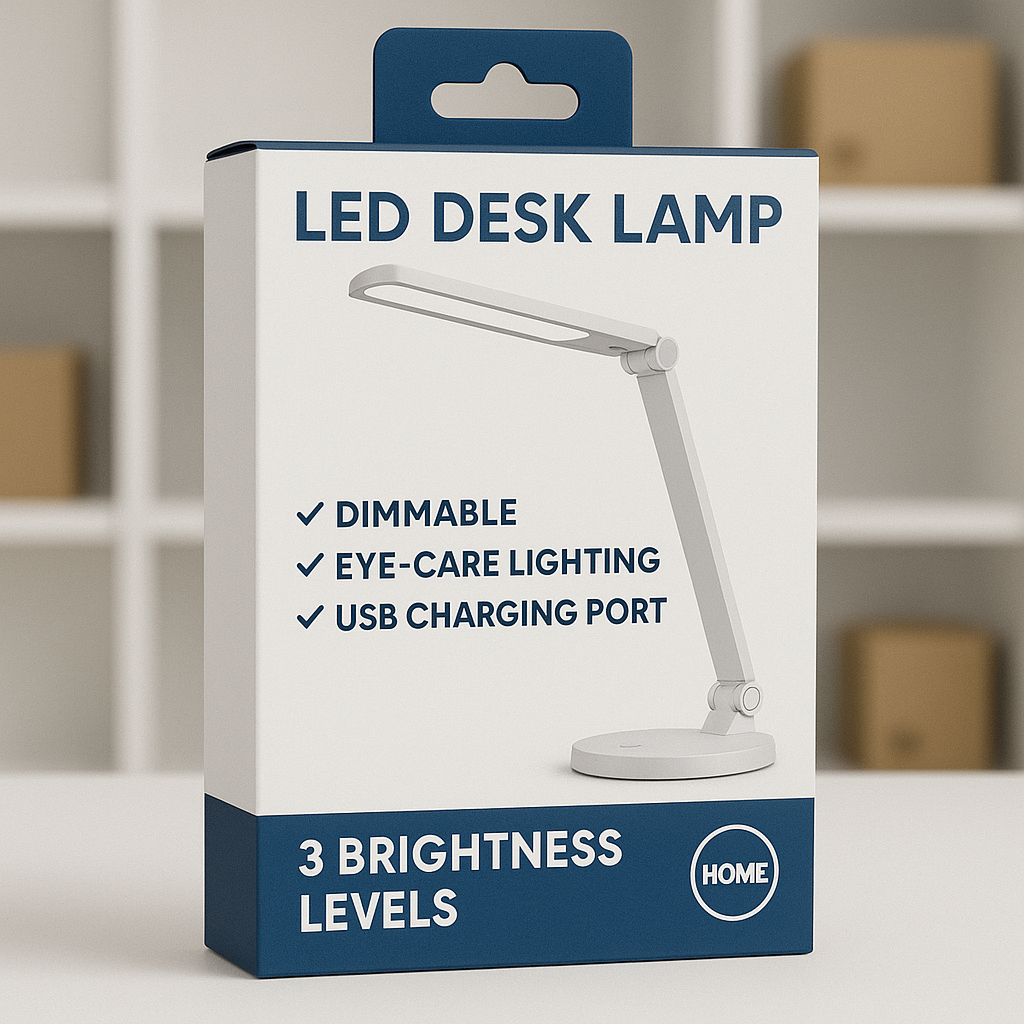
If your product will sit on a retail shelf (physical store), consider how the packaging will look lined up. Many brands design bright, eye-catching packaging so it pops among competitors – but also ensure it’s informative. Key info (product type, key benefit or quantity) should be visible from the front. No clutter: avoid overly busy designs that confuse. Conversely, for online retail, the packaging should photograph well – matte finishes to avoid glare in photos, clear product images or illustrations on the box, etc. In 2025, a significant portion of sales are influenced by product listing photos, so a photogenic package can help. Also, if selling in stores, consider retail security needs: for instance, high-value items might need to be in tamper-evident packaging or accommodate anti-theft tags. Some stores use hang tags or peg hooks, so having a hang-hole on a lightweight item’s packaging can make it more versatile for display.
Customer Experience & Ease of Unboxing
Retail-ready means the end customer can easily open and use the product. Use “frustration-free” principles: easy-open tear strips, minimal use of excessive twist-ties or hard clamshells (unless theft prevention necessitates it). If you do use zip ties or screws to secure a product (common in displaying a product in an open box), consider including a small tool or making them finger-loosen type, so the customer isn’t frustrated. The packaging should also ideally be reclosable or reusable until installation/use (especially for products like sets of items – e.g., a set of vacuum storage bags in a box that can be used to store them when not in use). From the moment the customer opens it, the packaging should convey quality: no one wants to receive a box that looks crushed or cheaply made. It reflects on your brand. Using quality card stock or adding a nice finish (like a glossy photo, or maybe a simple insert card on top saying “Thank you for your purchase!”) can elevate perception.
Testing, Testing, Testing
Don’t just trust the factory’s word that the packaging is good – test it yourself. Perform your own drop tests on sample packages. Ship a few samples to yourself via typical courier to see how they fare. If something arrives damaged or scuffed, iterate on the packaging. A retail-ready package prevents damage – it doesn’t just react to it. Hidden Path Creative noted common packaging failures like leaky containers, crushed boxes, or scratched labels, which lead to returns and lost sales. These are preventable with better packaging choices (e.g., sealing liquids, using thicker boxes, scratch-resistant coatings on labels). The goal is that every product reaches the consumer in perfect condition, and the packaging still looks good when it arrives.
4. Clear Instructions and Documentation
A retail-ready product should never leave the user guessing. Including clear, concise instructions (and any other necessary documentation) is a hallmark of a product ready for retail. Consider what a customer or store associate might need:
Assembly Instructions
If the product requires any assembly (furniture, lamps, organizers with pieces, etc.), provide a printed instruction sheet with diagrams and easy steps. Use clear English (and other languages as appropriate for your market). It can be frustrating for a buyer to get a new shelving unit and find poorly translated or confusing instructions. Since your audience might include novice brand owners or everyday consumers, write instructions in plain language and have them proofread by a native speaker. If the assembly is complex, include tips or link to a video tutorial (a QR code on the manual could be a nice touch). For items that use hardware, a parts list with pictures ensures the customer can identify everything. Many brands also include a small bag of extra screws or parts for convenience – a very customer-friendly move that reduces support tickets if someone loses a screw.
Product Usage Guides
For cleaning tools or kitchenware, provide guidance on use and care. For example, a microfiber mop might include instructions on how to wring it, or how to wash the pads. Cookware might have a leaflet on first-time use (seasoning a cast iron pan) and cleaning (dishwasher safe or not). Including this info makes your product feel more professional and helps users get the best results (leading to better reviews!).
Safety and Warnings in Manual
Some information might be too detailed for the packaging and more suited to the instruction manual or insert. For instance, a power tool will have safety warnings pages in the manual (even if the box only has a couple icons). Think about any liability aspects: if it’s a lamp, warn to unplug before changing bulb; if it’s a curtain, warn about keeping cords out of children’s reach (to prevent strangulation hazards); if it’s a chemical cleaner, include first aid info for contact or ingestion. Compliance standards often require certain warnings in documentation, so check regulations. Electrical appliances, for example, often should reference FCC compliance statements in the manual (per FCC Part 15).
Multiple Languages (if applicable)
While English is the primary language for U.S. retail, having Spanish translations in manuals is a plus given a large Spanish-speaking population. Some retailers might actually require bilingual packaging or inserts (California Prop 65 signs in stores are often bilingual English/Spanish, for instance). Ensure any translations are done professionally – a poorly translated manual can confuse customers more. The key is the accuracy and clarity of the information.
Warranty Cards / Registration
If you offer a warranty, include a card or section in the manual about it. Many brands include a postcard or insert prompting customers to register their product online for warranty or to receive a bonus. While this edges into marketing, it’s part of the package and contributes to the user’s perception of a complete, legitimate product. It’s also an opportunity to gather feedback or build a relationship (just ensure any data collection complies with privacy laws).
Compliance Documentation
Some products (like electrical equipment, or products for infants) might legally require certain documentation to be provided to the end-user. For example, children’s products might need a Children’s Product Certificate accessible; electronics might need a statement of conformity. Usually, this can be in fine print in the manual or a separate insert. If your item has been tested by an independent lab for something (say, a rug that meets fire safety code), you can even mention “This product meets XYZ standard” in the manual – it gives consumers peace of mind.
Quality Assurance Notes
Occasionally, brands include a little QA slip (“Inspected by #5” or a checklist that was supposedly ticked off during QC). While not required, touches like that can emphasize to the customer that quality checks were done – reinforcing the retail-ready nature. For instance, high-end cookware might include a card that says “Handcrafted and inspected – lot number ___.” This can reduce returns because it builds confidence that the item was verified.
In summary, think from the end-user’s perspective: Does your package include everything they need to use and enjoy the product safely? If yes, you’re retail-ready in this department. If not, add the missing pieces (be it a manual, labels, or hints for use). It’s much cheaper to print a 50¢ instruction sheet and prevent a flood of “How do I…?” customer emails or 1-star reviews later.
5. Safety Compliance & Certifications
Retail-ready home products must meet all safety and regulatory standards applicable in their category – this is non-negotiable. Compliance isn’t just red tape; retailers and consumers demand it. Key compliance checkpoints include:
Electrical Safety (UL/ETL for Lighting & Appliances)
If you’re sourcing lighting (lamps, fixtures, LED strings) or any electric home appliance, get it certified by a Nationally Recognized Testing Laboratory (NRTL) such as UL or Intertek/ETL. While U.S. law doesn’t mandate UL listing for every product, nearly 100% of building codes and retailers require UL or ETL certification for lighting and electrical devices. The UL mark on your product’s label shows it won’t pose fire or shock hazards. Without it, many retailers (and informed consumers) will simply reject the product. Work with your manufacturer early to arrange for UL testing – it can take time. The same goes for other electrical standards: FCC Part 15 for electronics (ensuring they don’t emit harmful interference), Energy Star or DOE energy efficiency labeling if required (for certain appliances). Being retail-ready means these certifications are already done by the time you’re selling – you can’t “figure it out later” because retailers will ask for proof or it might even be illegal to sell without them (in some jurisdictions or marketplaces).
Chemical and Material Safety
Home products often involve materials that could be regulated. For example:
- Furniture and Fabrics: Upholstered furniture, cushions, and mattresses need to comply with flammability standards (16 CFR 1632/1633, or CAL TB117-2013 in California). Soft furnishings like decorative pillows are often required to have a law label (as discussed) and meet certain fire safety criteria (even if just “careful with open flame” – some states have specific rules). Ensure your factory uses flame-retardant materials only if allowed (some flame retardants are themselves now banned or require Prop 65 warnings). If your product contains foam or adhesives, be mindful of VOC emissions or certifications like CertiPUR-US (for foam) to appeal to safety-conscious consumers.
- Kitchenware: Anything that contacts food or drink must be made of food-safe materials. FDA compliance is a must – plastics should be BPA-free (and you should have documentation for that), ceramics should be lead-free (California has strict standards for lead/cadmium in dinnerware). Stainless steel or silicone items should be of food grade. It’s wise to get an FDA food contact test for items like containers, cookware, utensils, etc. Also, if making any claims like “microwave safe” or “dishwasher safe,” test that claim thoroughly or you could face customer complaints or liability.
- Cleaners and Chemicals: If your home product is a cleaning solution, air freshener, etc., it might be regulated by the EPA (under FIFRA if it makes any antimicrobial claims). Ensure you have EPA registration if needed, and the packaging follows Hazardous Communication standards (warning labels, ingredient disclosure if required). Even something like a fragrance diffuser might need a VOC compliance check in certain states. And always label chemicals with appropriate first aid and hazard warnings. Retailers like Walmart have strict policies for chemical products – they may ask for Safety Data Sheets (SDS) and proof of compliance with all federal and state laws.
- Prop 65 (again): I mention it again here because compliance isn’t just labeling – it’s also possibly reformulating to avoid dangerous chemicals. A truly retail-ready approach might be to design out Prop 65 substances if feasible (to avoid needing the warning). For instance, if your storage containers have a plastic part that contains DEHP (a phthalate), you could switch to a different plasticizer to not require a cancer/repro harm warning. Similarly, many electronics makers now offer RoHS compliance (limiting heavy metals) which also helps with Prop 65. If elimination isn’t possible, ensure you have the warning ready as discussed.
- Other Category Certifications: There are various quality marks that, while not mandatory, enhance retail readiness. For example, a rug might carry the Carpet and Rug Institute’s Green Label (low emissions), or wooden kitchen products might have an FSC certification (sustainably sourced wood) – these can boost your product’s appeal and show you meet certain standards. While not required by law, some retailers or consumers look for them.
Testing and Documentation
It’s not enough to assume compliance; you should test and document it. Work with certified labs to test products for things like ASTM durability standards (furniture and storage might have weight load tests), ISO light safety (for LED brightness and flicker), etc., as relevant. Keep all your lab test reports and certifications organized, as retailers (or Amazon) might request them during onboarding or audits. For children’s products in home (like a kids’ storage box or a blanket), you must have a Children’s Product Certificate (CPC) showing compliance with CPSIA (which covers lead content, phthalates, etc.). Even if your product is not for kids, note that any product can be pulled for consumer safety – for example, the CPSC recently highlighted a recall of baby loungers lacking proper labels, showing how missing compliance can lead to recalls. Retail-ready means you’ve proactively met these requirements to avoid such issues.
Insurance and Liability Considerations
This is more on the business side, but many retailers require suppliers to carry product liability insurance, especially for products that could cause injury (electronics, furniture that could tip, etc.). Make sure you have appropriate insurance in place as part of being truly ready to retail – it’s often a prerequisite in supplier agreements.
In sum, safety compliance is a cornerstone of retail readiness. It protects consumers and it protects you and your retail partners. By engineering compliance into the product from the start (choosing safe materials, designing to standards, testing thoroughly), you ensure there are no last-minute blockers to selling the product in any channel.
6. Polished, “Photo-Ready” Appearance
Finally, a retail-ready home product must look the part. This goes beyond just eye-catching packaging – the product itself should have a polished appearance and consistent finishing, because in today’s retail, product photos and in-person impressions carry huge weight. Here’s how to make sure your product passes the visual test:
Consistent Finish & Build
During manufacturing, enforce cosmetic standards. All units should have the same finish and color tone. For example, if you’re selling a set of ceramic canisters in “matte white,” every piece in the set and every set in the batch should match in color (no unsightly color variations) and have a smooth, uniform matte glaze with no bubbles or bare spots. Any logos or decorations should be printed clearly and aligned correctly. The product should look like the high-quality sample you approved. This consistency needs to extend to small details: no random scratches on metal parts, no loose threads on textiles, no dents in lampshades, etc. A tip is to include appearance checks in your QC (which we covered) – inspectors should flag things like uneven paint or misaligned parts.
Ready for Close-Ups
When you create your product listings or send samples to retail buyers, the product will be scrutinized in high-resolution images. “Photo-ready” means the product has an attractive design and no visible defects that a camera (or a customer’s eyes) would catch. Think about all the zoomed-in images on Amazon listings – customers look closely. Ensure surface quality is high: glossy surfaces on décor should be free of swirl marks or dust specks (factories can wipe items before packing and maybe put protective film on glossy parts to prevent scratches in transit). Textiles should be neatly folded and not overly wrinkled in package (some steaming or careful packing can help). Appliances or devices with screens should have a protective film to avoid scratches and smudges. Also consider how the product photographs – for instance, choose finishes that don’t easily fingerprint, or plastics that don’t look cheap under bright light. If your product is something like a clear acrylic organizer, make sure the plastic is crystal clear and not cloudy; if it’s a mirror or glass item, ensure it’s clean and scratch-free so it looks great in photos.
Shelf Appeal (if applicable)
In a physical retail setting, your product’s appearance needs to draw the customer in. Studies show 64% of shoppers choose products primarily based on packaging – which includes how the product looks through any packaging window. So if your home décor item is visible, arrange it nicely. A cushion shouldn’t be vacuum-packed to a pancake on a store shelf (even if that’s efficient for shipping) – it kills the appeal. You might vacuum-pack for transit, but design packaging that lets it fluff up to full shape in store. For lighting, many are sold in closed boxes with a picture, but if yours is displayed, ensure the actual product finish looks premium under store lighting (e.g., no finish flaking that a bright store light would reveal). Small touches like a nice color hangtag or a ribbon can enhance shelf display for things like kitchen towels or utensils.
Branding and Professionalism
A retail-ready product often carries a sense of a developed brand identity. That means consistent logos on product, packaging, and inserts, a cohesive color scheme, and overall professional look. Avoid any amateurish elements like low-resolution prints, inconsistent font usage, or misprinted labels. If you have multiple products, try to maintain a line look – it gives a strong impression on the shelf and online that you are a serious brand. Also, any imagery on the packaging should be high quality – if you show the product in use on the box, invest in good photography or rendering.
No Inappropriate Stickers
Sometimes factories will slap on random inventory or QC stickers on products – ensure these are removed or placed out of consumer sight. The only stickers on your product or packaging should be the ones you intend for the customer, like the barcode or a feature callout. A clean presentation is best.
Final Cleaning
It sounds basic, but products should be clean when packed. Dust, fingerprints, or factory residues (like oil on a stainless steel item) are a turn-off. Many suppliers will do a final wipe-down. For textiles, ensure they are free of factory odors or stains. Some brands include a light fragrance sachet or just make sure items are well-ventilated so they smell neutral on opening – customers often mention smells in reviews.
A good mindset is to treat every unit as a display unit. If even one unit a customer receives looks inferior, that could be a lost customer or a negative review. Strive for showroom quality across the board. When your product both functions well and looks flawless out-of-the-box, you have achieved true retail readiness.
Conclusion
Making a home product truly retail-ready can be complex, but it’s absolutely achievable with the right approach and partners. From our exploration, it’s clear that success lies in meticulous preparation – getting the quality right, the packaging and labeling perfect, and all compliance boxes checked before the product reaches U.S. shores. In 2026, retail-ready means your product can seamlessly go from a Chinese factory to an Amazon warehouse, a Walmart shelf, or a customer’s doorstep without a hiccup. That level of readiness comes from expertise and attention to detail.
This is where a sourcing partner like China Direct Source can be invaluable. We specialize in guiding products through this entire journey – from initial factory sourcing to the final retail prep. In fact, we use a comprehensive checklist to ensure no requirement is overlooked – from compliance standards to packaging needs. Our team conducts thorough quality inspections, coordinates lab testing for certifications, supervises packaging design and printing, and even manages labeling and kitting for different retailers’ specs. Essentially, we act as your on-the-ground quality gatekeepers, so that by the time your goods ship out, you know they’re 100% ready to sell.
Whether you’re a new brand owner or an experienced importer, having a trusted partner can take a huge load off your shoulders. China Direct Source can work with you to make your kitchenware, décor, textiles, cleaning gadgets – any home product – retail-ready for Amazon, Walmart, DTC, or any channel. We’ve helped clients get UL certifications for lighting, pass Amazon’s prep requirements, design standout retail packaging, and everything in between. With our end-to-end support, your focus can be on growing your business and brand, while we handle the nitty-gritty of compliance, quality, and logistics.
Ready to launch a home product that’s truly retail-ready? Contact China Direct Source today to see how we can help turn your product vision into a reality on store shelves and online marketplaces. We’ll be your partner every step of the way – making sure your home goods are not just made in China, but made right for the U.S. retail market. Let’s get you prepped, compliant, and ready to sell across all channels! 🚀